
A library can be part of your preparedness plans. Books don’t need a subscription, signal, or software update to work. If your power or connection goes down, the information in those books will still be there waiting for you.
Of course, you don’t want to just grab any old 15 books and call it a survival library. You want books on topics that apply to your family, written by identifiable authors, and easy to navigate (so you’re not flipping through pages to find what you need). Otherwise, you’re just going to end up with useless clutter like that outdated radio exam manual or mushroom field guide that doesn’t apply to your region.
Instead, check out these 15 books, all of which are by named authors, on communications, medicine, shelter and construction, food production and storage, navigation, and other household and survival skills. Some will apply to just about any family, while others (like the chicken- and gardening-related ones) may or may not apply depending on your situation and interests. There’s an Amazon link in each book card.
Start with the ones that are most important or likely to apply to your family. Or, if possible, check them out of the library first! You don’t want to just go through and order all of them and never crack them open.
A note of caution: None of these books (or any book for that matter) should be considered a replacement for professional medical, electrical, or other advice, training, or contact. That said, these books can supplement training and professional advice, help jog your memory, and give you a better idea of what questions to ask professionals. They won’t magically make you an expert in medicine, wilderness survival, electrical work, or anything else covered in the pages; use them to supplement skills you’ve been actively practicing and learning, not as an excuse to try out procedures you’ve never been trained on!
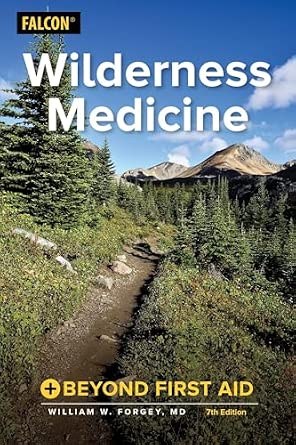
1. Wilderness Medicine: Beyond First Aid
When you need medical assistance but can’t count on an ambulance arriving in the next five minutes, you’re going to want Wilderness Medicine: Beyond First Aid by William W. Forgey, M.D. on hand. This comprehensive guide to medical care and evacuation in hard-to-reach areas covers everything from patient assessment to injury care. Make sure you have the linked seventh edition!
Pair this book with a first aid class and make sure you know how to use everything in your first aid kit (and where that kit is!).
2. The Forager's Harvest
The Forager's Harvest: A Guide to Identifying, Harvesting, and Preparing Edible Wild Plants by Samuel Thayer is a great place to start learning about identifying, harvesting, and eating wild plants. (Again, avoid books with titles like “local wild edibles”, make sure there’s an author’s name on the spine!) Pair this book with classes and mentors in your area, since field trips and in-person instruction are critical when learning to identify plants.
Start with identification only, jot down plants you see, along with the time of year and habitat. Do some follow-up research, and leave any plants you’re unsure about alone!
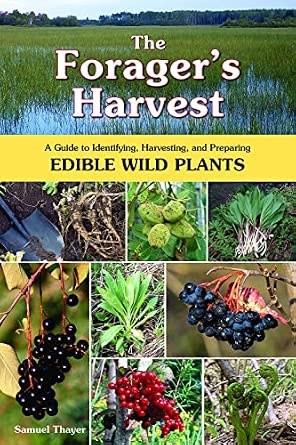
Book 2 · Samuel Thayer
The Forager’s Harvest: A Guide to Identifying, Harvesting, and Preparing Edible Wild Plants
Paperback; confirm regional relevance.
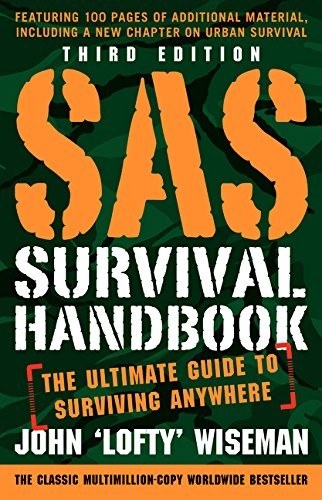
3. SAS Survival Handbook
Need a book that covers a little bit of everything? John “Lofty” Wiseman’s SAS Survival Handbook, Third Edition: The Ultimate Guide to Surviving Anywhere (the third edition also covers urban survival) covers an impressive array of skills and situations. This is a great book to have on hand to figure out what else you need to be studying! For example, if you don’t know much about navigation, this book can fill you in on the basics. From there, you can dig deeper into map and compass use. Likewise, if you’ve never camped before, this book can help you plan out your first (easy!) camping trip. Just remember: you can’t learn to whistle Dixie just by reading about it. You’ll need to put what you’re learning into practice!
4. The Encyclopedia of Country Living
Wondering about chickens? Or gardening? Or what on earth to do with all those tomatoes you grew? Carla Emery’s The Encyclopedia of Country Living, 50th Anniversary Edition is a great place to get an overview of many aspects of country living, from keeping chickens to growing and preserving food to general homesteading information. It’s also a great book for figuring out what kinds of projects and classes you might like to pursue further. For example, Emery’s book can give you a general idea of what’s involved in keeping livestock: feed, housing, day-to-day tasks, etc. Then you can look into more specific resources on raising, say, goats or rabbits.
The Encyclopedia of Country Living might be a later purchase if you live in an urban or suburban apartment, but if you’re working on building your self-sufficiency on a small acreage, this could be a great first book.
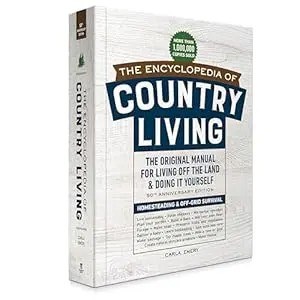
Book 4 · Carla Emery
The Encyclopedia of Country Living, 50th Anniversary Edition
50th anniversary edition; paperback.
5. Ball Complete Book of Home Preserving
When that garden of yours starts producing bumper crops of tomatoes and peppers and zucchini, you’re going to want to know about preserving! The Ball Complete Book of Home Preserving (edited by Judi Kingry and Lauren Devine) will show you how to make jams and jellies and pickles and preserve tomatoes and more, including pressure canning! (Note: there are various editions of Ball Complete Book of Home Preserving out there, so be sure to check out the edition and format of the particular one you’re looking at.) This is a great book to refer to before you’re standing around with armloads of produce wondering what in the world to do with it all. Note: canning requires much more than just a jar, lid, and wishful thinking, do your research!
For actual canning, use current, tested directions from authoritative sources such as the National Center for Home Food Preservation. Follow the specified ingredients, jar size, processing method, and altitude adjustments. Do not treat family tradition, an old handwritten recipe, or a sealed lid as proof that a food is safe.
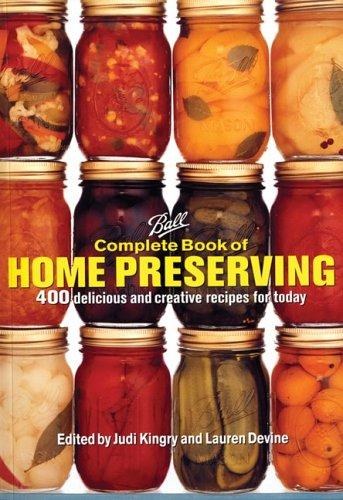
Book 5 · Judi Kingry and Lauren Devine, editors
Ball Complete Book of Home Preserving
Paperback; confirm the edition and binding before ordering.
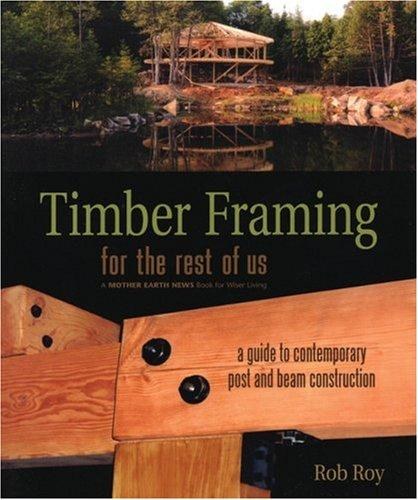
6. Timber Framing for the Rest of Us
Shelter is an important part of prepping and self-sufficiency, and Timber Framing for the Rest of Us: A Guide to Contemporary Post and Beam Construction (by Rob Roy) can help you learn about a form of building that doesn’t necessarily start out with insanely complicated joinery (though there’s plenty of room for learning it if you’d like) and utilizes many commercially available fasteners. Of course, before you tackle any large building project, be sure to learn about local building codes, permits, and so on, and consult with professionals as needed about loads (snow, wind, etc.), footings and foundations, and more. Understanding drawings and concepts is different than having a code-approved design! And if you’re wondering about adding a little extra insulation to your rental apartment, you may want to tackle that project (and book) a little later on.
7. ARRL Ham Radio License Manual
Do you have a hankering to learn more about ham radio? If so, grab a copy of the ARRL Ham Radio License Manual (sixth edition, see note about editions below), learn the basics of radio, antennas, ham radio gear, safety, proper ham radio operating, and more, and work toward your Technician’s ham radio license! (Note: this is the correct edition for the Technician’s license questions that are used from July 2026 through June 2030, an older edition may be cheaper, but you’d be studying for the license using expired questions!)
Note that a ham radio license is just one piece of ham radio readiness, but it’s an important piece. (And, just as with canning, having a radio does not a ham radio operator make.)
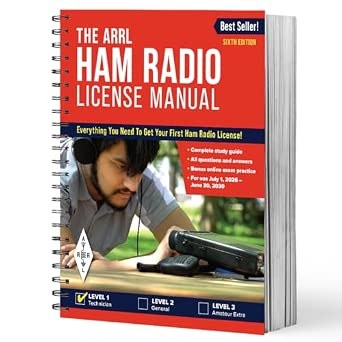
Book 7 · ARRL Inc.
ARRL Ham Radio License Manual, 6th Edition
Sixth edition; 2026–2030 Technician question pool; spiral-bound.
8. The Modern Herbal Dispensatory
There’s plenty of interest in herbal remedies, and it’s a good idea to learn more about plants and how they’ve been used as remedies. The Modern Herbal Dispensatory: A Medicine-Making Guide (by Thomas Easley and Steven Horne) may be a good resource for you to learn some of the terms used when discussing herbal preparations and remedies, as well as learn more about preparations. Before you use herbal remedies, though, it’s important to consult with your doctor or pharmacist, especially if you’re considering using them on a child or if anyone is pregnant, chronically ill, or taking any medications. (Learn more about potential drug-herb interactions and more at the National Center for Complementary and Integrative Health.) And remember, even if something is natural, that doesn’t mean that it’s safe, effective, and appropriate for your particular situation! And keep in mind that herbal preparations shouldn’t be used to avoid seeking medical care when needed.
(For many people, I’d recommend focusing on other projects, replacing expired first aid supplies and medications, taking a first aid or CPR class, etc., before picking up an herbal medicine book, though of course that’s up to each person to decide for herself what books and skills are most important to add to her library.)
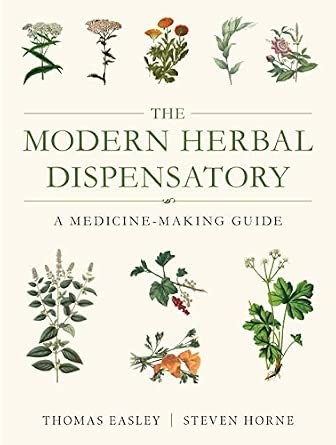
Book 8 · Thomas Easley and Steven Horne
The Modern Herbal Dispensatory
Paperback; specialty herbal reference.
9. Butchering Poultry, Rabbit, Lamb, Goat, and Pork
If you’re raising (or planning on raising) animals, it’s important to learn about processing them in a safe, sanitary, and humane manner. Butchering Poultry, Rabbit, Lamb, Goat, and Pork: The Comprehensive Photographic Guide to Humane Slaughtering and Butchering (by Adam Danforth) is just such a book, and it’s a great resource to learn more about processing various animals. (Of course, as with many things, it’s helpful to take a class and get some hands-on experience, too.) And, of course, make sure you’re in compliance with any regulations in your area about slaughtering and processing animals.
Book 9 · Adam Danforth
Butchering Poultry, Rabbit, Lamb, Goat, and Pork
Paperback; illustrated meat-processing reference.
10. The Ashley Book of Knots
If you’re looking for a book of knots (and how to tie them), you’re going to want to check out The Ashley Book of Knots (by Clifford W. Ashley). It’s a great reference book to have at home, with drawings of a whole slew of knots and uses. Of course, there’s no reason to try to learn all the knots in this book, instead, pick one or two projects around the house that could use rope or cord (tying something down so it doesn’t blow away, etc.), and learn some knots that would be helpful for those tasks. Practice tying them, figure out which knots hold best for particular tasks, learn how knots behave under tension, and figure out how to untie them once they’ve been under tension. (And, of course, don’t rely on knots learned from a book for life safety situations, such as rescue or rigging situations, without further instruction, practice, and up-to-date information.)
11. Mobile Solar Power Made Easy!
If you’re interested in learning more about solar power, but aren’t sure what to get started with, you might consider picking up a book such as Mobile Solar Power Made Easy! (by William Errol Prowse IV). It’s geared toward smaller solar set-ups, such as for vehicles or boats, but can still give you some ideas about how to figure out what your power needs are, how much storage you’d need, and how the various components in a solar set-up work together. (And of course, before jumping in and purchasing a solar set-up, make sure you have a good idea of what you’d be using your set-up for, because there’s a big difference between “I want to be able to charge my phone” and “I want to power my electric heat!”)
The print book dates from 2017. Treat component recommendations and example equipment as historical, and check current manufacturer instructions and applicable electrical requirements before acting. This is not a substitute for qualified electrical design, particularly for household wiring or a system connected to a building.
Book 11 · William Errol Prowse IV
Mobile Solar Power Made Easy!
Paperback; published in 2017; mobile solar systems.
12. The Chicken Health Handbook
If you’re keeping chickens, consider picking up a book such as The Chicken Health Handbook (by Gail Damerow, the second edition). Of course, you’ll still want to keep up-to-date information on chicken diseases and how to report them, but a book such as this can give you some basic information on raising healthy chickens, as well as information on what to look for when one of your chickens appears to be feeling poorly. (And if you keep chickens, it’s probably worth making a concerted effort to keep track of information about your chickens, such as changes in feed, medications administered, unusual happenings, etc., so that if one of your chickens gets sick, you’ll have a good idea of what might have caused it. And if you wind up taking your chicken to a vet, odds are you’ll get more out of your vet visit if you can explain what’s been going on with your chickens, rather than guessing at what might have happened yesterday.)
The Chicken Health Handbook (by Gail Damerow, the second edition) is just that, a chicken health handbook. If you’re looking for information on the health of your dog, goat, or horse, you’re probably going to need to find a different book!
Book 12 · Gail Damerow
The Chicken Health Handbook, 2nd Edition
Second edition; paperback; chicken health.
13. Seed to Seed
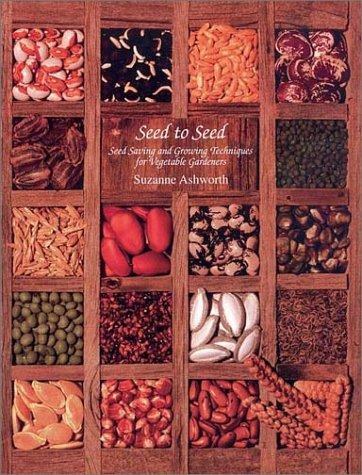
If you’re looking for a book on seed saving, Seed to Seed: Seed Saving and Growing Techniques for Vegetable Gardeners (by Suzanne Ashworth, the second edition) might be worth checking out. Saving seeds isn’t as simple as tossing a handful of seeds into an envelope, different plants have different requirements for successful seed saving, and Seed to Seed can help you figure out how to save seeds from different vegetables (and how best to store them once you’ve saved them!)
Seed to Seed: Seed Saving and Growing Techniques for Vegetable Gardeners (by Suzanne Ashworth, the second edition) can teach you seed saving skills, but seed saving isn’t going to magically fill your pantry with food! If you’re interested in seed saving (or gardening, for that matter) it’s worth keeping track of what you’ve done, when you planted things, how things turned out, etc., so that you can use your experiences in future years!
14. Mushrooms of the Northeastern United States and Eastern Canada
Mushrooms of the Northeastern United States and Eastern Canada (by Timothy J. Baroni) is just that, a mushroom guide for the Northeastern United States and Eastern Canada. If you’re mushroom hunting elsewhere, pick up a good mushroom guide for your area. And in any case, don’t eat mushrooms you’re unsure about! (Mushroom hunting is best done in conjunction with an experienced mushroom hunter or your local mushroom club, and while there are mushroom identification apps out there, I wouldn’t count on any of them being infallible!) And while I’d recommend Mushrooms of the Northeastern United States and Eastern Canada as a way to learn about the mushrooms in your area, I wouldn’t exactly count on mushrooms as a staple of your emergency calories, if you’re worried about running out of food, there are probably better uses for your time than going mushroom hunting!
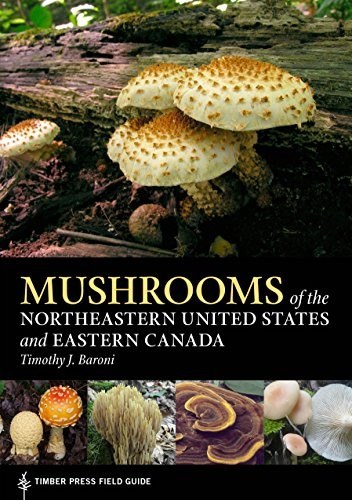
Book 14 · Timothy J. Baroni
Mushrooms of the Northeastern United States and Eastern Canada
Regional field guide: northeastern U.S. and eastern Canada.
15. Wilderness Navigation
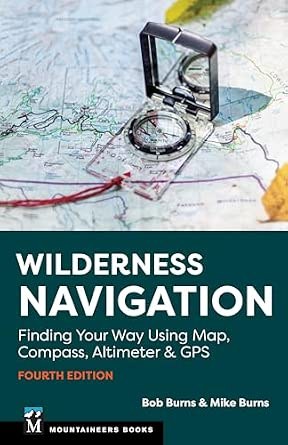
Wilderness Navigation: Finding Your Way Using Map, Compass, Altimeter & GPS (by Bob Burns and Mike Burns, I’d recommend the fourth edition) can teach you navigation skills, but it won’t contain a map of everywhere you’d like to go! If you’re interested in navigation, it’s worth picking up maps of your local area, and practicing navigating! (There are offline mapping apps that you can download onto your phone that can be helpful, but of course, they’re only as helpful as your ability to use your phone!)
Put the books to work
- Amateur radio: Consider joining a local amateur-radio club, and (after you’ve gotten your license!) get out there and start practicing. Learn what you can and can’t pick up with your equipment, and what you can hear locally.
- First aid and medicine: Consider going through your first aid kit and restocking expired medications, and consider taking a first aid and CPR class.
- Meat preservation: If you don’t keep animals, it might be worth considering a book about canning and preserving meats, after all, if you’re going to learn how to butcher animals, you’re going to want to know what to do with the meat afterward! And even if you’re not planning on butchering animals, it might be worth considering learning about canning and preserving meats, and making sure that you’ve got canned meats on hand!
- Food storage: If you’re not keeping animals, consider focusing your preservation efforts on learning about food storage, and making sure that you’ve got an ample supply of stored food!
Of course, none of these survival books will do you much good if you don’t take the time to read them, and consider what you can learn from them! So dig in and read! Learn new skills! And, once you’ve picked up your survival library, make sure that you’re keeping up-to-date information on a wide variety of survival skills! After all, information changes, and it’s worth making sure that you’re up to date on the latest recommendations for everything from electrical requirements to food safety!
Build and organize your household library
The books you should have on your bookshelf depend on your goals. If you’re primarily concerned about preparing for an emergency situation or an extended power outage, you might prioritize the first aid book, a general reference, the navigation book, and making sure you have a solid emergency plan. If you’re more interested in gardening, you might add on the food preservation and seed saving books. If you have chickens, you might prioritize picking up a chicken health book over, say, a timber framing book.
If you’re interested in picking up a book from this list (or, you know, any book really) you can check it out from your local library before buying to make sure you like the style of the book, whether the illustrations are helpful, if the book is easy to navigate (flip to the index and see if you can quickly find information on something you know a little bit about, it’s probably not worth your money if you can’t easily find information in the book you’re interested in when you need it).
If you’re looking for a copy of one of these books used, make sure the book is in good condition! (Especially for medical books and books on topics that change frequently, make sure you’re getting an up-to-date edition!) If you’re shopping on Amazon, pay attention to which edition you’re buying, who’s selling it, whether you’re getting a paperback or hardback, etc., just because you recognize the book cover doesn’t necessarily mean you’re getting the book you want.
Keep any reference books you want immediately accessible in an emergency in an easily accessible place (not in a box behind Christmas decorations!) Use removable book tabs to mark places you’ve already read. Make an index page for other members of your household on where to find important information, first aid information, emergency phone numbers, maps, appliance instructions, utility information, etc.
Store any books you want to keep together (especially if you’re planning on keeping a lot of reference books together in one place in case of an emergency) in a dry place above any area that could potentially flood or be affected by a water emergency. (A book box can be helpful for keeping an emergency reference library together, or if you’re moving!, but make sure the books are dry before storing them in a closed container, and I wouldn’t necessarily recommend keeping your entire reference library in your damp basement just because you bought a book box with a lid!)
You may want to consider getting a binder for reference material specific to your household, emergency contacts, meeting places, medication information, etc. You may want to print out instructions for appliances you own. (Use government and other resources online that you’re allowed to print out or copy.) Label anything you print out with where you got it from and periodically check to make sure the information is still accurate!
It’s also helpful to practice finding the information you need in your reference library, ask a member of your household where they’d look for important information in an emergency. Can they find the important phone numbers? Appliance instructions? Can they read by battery light? Chances are you’ll learn more from practicing using the reference library you already have than buying more books!
Safety references and book-cover notes
For canning, consult the National Center for Home Food Preservation and UC Master Food Preserver guidance on altitude adjustments. For herbal safety, see NCCIH guidance on herb–medicine interactions. Book covers are reproduced at a small size to identify the books discussed; rights remain with their respective owners.
Featured photo: Orhan Pergel / Pexels. Pexels License. Archival photograph, taken February 20, 2024; downloaded November 17, 2026. The photograph is illustrative and does not show the recommended collection.

 Wildfires Can Disrupt Drinking Water Long After the Flames Are Gone ↗
 How to Stay Warm When The Power Goes Out ↗


